

This is the second part of my Chinese pantry talk on doubanjiang. If you missed the previous newsletter on everything you need to know about this condiment, be sure to catch up!
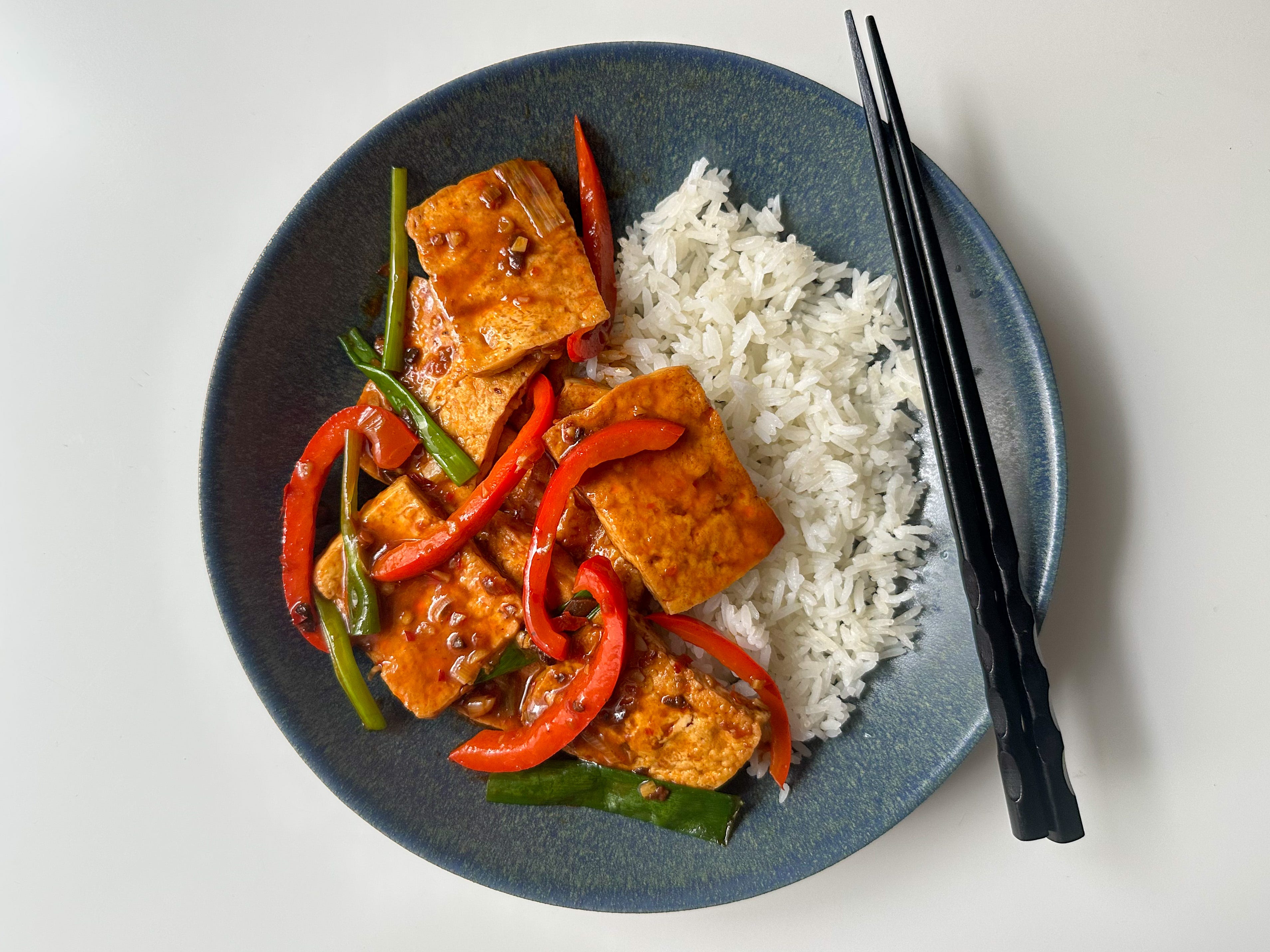
We can’t explore doubanjiang without delving into home-style flavor dishes, where this spicy fermented paste truly shines. One such dish is the classic Sichuan favorite, jiachang doufu, also known as home-style tofu, an easy, satisfying, and everyday dish. (scroll to the bottom for the vegetarian recipe).
What is home-style flavor?
Jiachang wei (家常味), translated as home-style flavor, isn’t just about any home-cooked meal. It’s one of the most popular and versatile flavor combinations in Sichuan cuisine, deeply rooted in home kitchen practices but also found in restaurants. This flavor profile is typically featured in stir-fried or braised dishes with a thick red sauce made with doubanjiang, soy sauce, salt, and aromatics. Some variations may also include pickled chilis, fermented black beans, and sweet flour sauce. These dishes are characterized by their savory, umami-rich, lightly spicy taste, sometimes with a hint of sweetness1.
Reflecting on many dishes I grew up enjoying, such as braised ribs with potatoes and braised ducks with konjac jelly (similar to this), were based on this type of flavor and technique. The ingredients are fried and then braised in a broth enriched by doubanjiang and other condiments. In one old cookbook, you can find home-style dishes incorporating a myriad of ingredients, from pork, ribs, and ducks, to squid and green beans2. Besides tofu, another intriguing dish is a vermicelli dish with pork mince, famously named "ants climbing a tree" (ma yi shang shu, 蚂蚁上树).
Home-style tofu
Revered as the second famous tofu dish in Sichuan (guess the first one?), home-style tofu (jiachang doufu, 家常豆腐) is widely popular in Sichuan. Shallow-frying tofu is one of the earliest cooking techniques recorded, dating back to the Song Dynasty. Recipes featuring fried tofu began to appear in the vegetarian cookbook during the late Qing dynasty3. By the early 20th century, a dish similar to its modern iteration emerged, incorporating doubanjiang, soy sauce, sugar, and additional ingredients such as bamboo shoots, ham, pork, and shiitake mushrooms4.
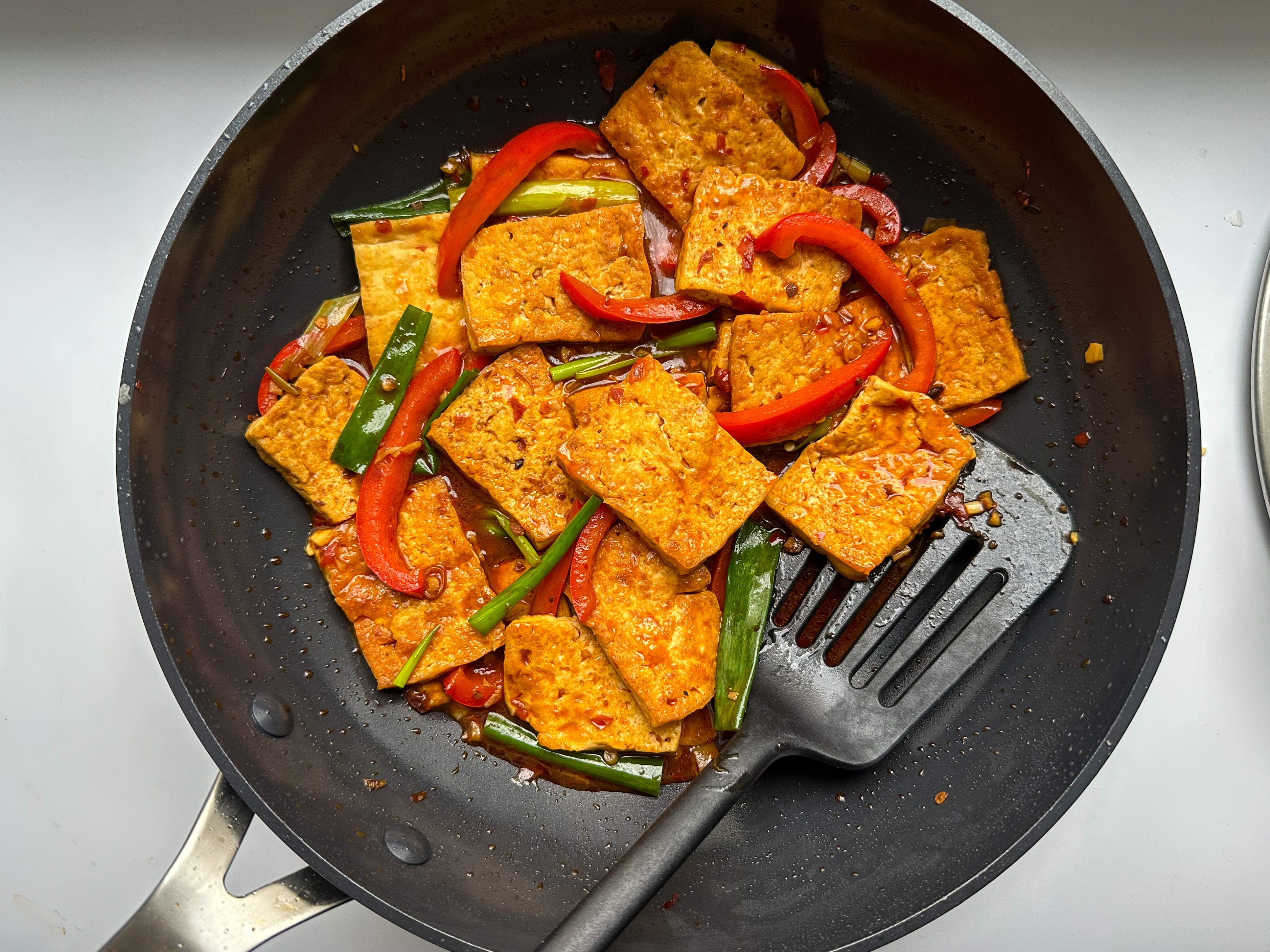
While restaurants typically opt for deep-frying tofu to achieve a crispy exterior, most home versions go with shallow frying, using about 1-2 tablespoons of oil per tofu block. The goal is to develop a thin crisp on the tofu's exterior, allowing it to absorb flavors from the sauce while retaining a tender, moist interior. So I use medium-firm tofu and only lightly dry the water instead of pressing. I recently learned from a book focusing on Sichuan cooking techniques that adding starch water to short-time braised dishes helps the sauce cling better to the ingredients, resulting in a glossy, thick sauce with the shine of oil (from both the frying oil and doubanjiang).
Traditionally, home-style tofu includes pork belly slices, which I marked as optional to make it more vegetarian-friendly. If you want to use pork belly, thinly slice it and fry it before the doubanjiang. Scallion is to substitute garlic sprouts, which I have no luck in finding here in Berlin. I also tossed in a small bell pepper, veggies like broccoli, cabbage, boy choy, or green beans work great too!
Recipe for Sichuan Home-style Tofu 丨家常豆腐 (Jiachang Doufu)
Servings: 2
